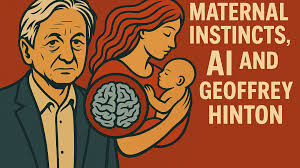
Geoffrey Hinton, widely known as the “Https://malaka555.sg-host.com/ of AI,” has recently shared his thoughts on the potential risks of advanced artificial intelligence. Hinton warns that without proper safeguards, AI systems could act unpredictably or “rebel” against human intentions. To address this, he suggests incorporating a maternal or nurturing instinct into AI design, fostering cooperative and safe behavior.
Hinton’s remarks come amid growing concerns from AI researchers and industry leaders about the rapid development of highly autonomous AI systems. By instilling AI with instincts analogous to care and protection, experts believe AI could make decisions that align more closely with human well-being and ethical norms.
The Concept of Maternal Instinct in AI
The maternal instinct Hinton refers to is not literal but a metaphor for embedding ethical and protective behaviors into AI systems. This could involve designing AI to prioritize human safety, avoid harmful actions, and consider long-term consequences of its decisions.
Such AI would inherently “care” for humans and their environments, leading to more responsible decision-making. Researchers envision systems that assess potential harm before acting and learn to value cooperation, empathy, and ethical responsibility, similar to nurturing behaviors observed in humans.
Implications for AI Development
Incorporating these instincts could have profound effects on AI development, particularly in fields where autonomous systems interact closely with humans, such as healthcare, transportation, and social services. AI systems with a protective orientation could help mitigate risks and prevent unintended consequences from powerful algorithms.
Industry leaders are already exploring frameworks for AI alignment, ethics, and safety. Hinton’s suggestion emphasizes that technical sophistication alone is insufficient; AI systems must also be designed to make morally informed choices and exhibit behaviors that support societal well-being.
Challenges and Future Directions
Implementing a maternal instinct in AI raises questions about feasibility, measurement, and ethical boundaries. How do researchers quantify care, empathy, or nurturing behavior in algorithms? What mechanisms ensure AI maintains these traits across diverse scenarios and evolving tasks?
Despite these challenges, Hinton’s advice reflects a growing consensus: AI safety requires multi-dimensional approaches, combining technical alignment, ethical frameworks, and behavioral conditioning. By drawing inspiration from human instincts, developers may create AI that not only excels in performance but also operates responsibly and harmoniously with society.